• Home
  • About
  • List Reviews Series
    • List
    • Reviews
    • Series
  • Meet
  • ABC
  • Away

bookshy

Powered by Blogger.


Image via Pinterest

I haven’t done this in a while, so I might be a bit rusty. Three books have been living rent-free in my head, and I needed to get them out. I did wonder if I should share this on Substack, but to be honest, I still don’t fully get Substack. Plus, I’ve been missing my blog. Not sure if this will lead to more posts, or if this might be a one-time deal. Still. Here we are. Hiiii!

This isn’t a review per se, more sharing things I’ve been sitting with since I read How to Say Babylon by Safiya Sinclair, First Born Girls by Bernice L. McFadden, and The Mercy Step by Marcia Hutchinson. My thoughts aren't fully formed, but I'm putting them down here anyway because I need them gone. The first two are memoirs, and the third is autofiction/semi-autobiographical. There was also an interesting way I experienced them across different formats. I read How to Say Babylon as an e-book, First Born Girls as a physical hardback, and The Mercy Step as an audiobook narrated by the author herself.  Each format brought its own vibe, but I didn’t feel like I lost anything in the process.

I should mention trigger warnings for violence against children and women.

What connects the three books for me isn’t immediately obvious, as they are set in different countries (Jamaica, America, and England) and eras, but across all three, daughters are growing up in violent homes with violent fathers, daughters have mothers who stay or keep returning, and daughters eventually find a way out through books and literature.

In How to Say Babylon, Safiya Sinclair writes about growing up Rastafari in Jamaica, and the violence her mother, herself, and her siblings experienced at the hands of her father. One of the things I enjoyed most is how she weaves Rastafari history and its different sects, as well as the persecution Rastafari face in the community. There is something very ironic in how Sinclair shows that a religious and social movement built on raising Black consciousness and liberation from the shackles of white supremacy, at the same time, holds very heavy patriarchal ideologies towards women. Sinclair is the oldest of her parents' four children (and also the first-born daughter; I will return to that later), and her once-loving father becomes increasingly violent the older she gets and the deeper he moves into the religion. One scene involving her father, a machete, and the police being called stayed with me long after I finished reading. Sinclair also writes about how she finds literature (books and, mainly, poetry), and how writing ultimately frees her, allowing her to leave the island and, more importantly, her father.

A scene towards the end of How to Say Babylon takes place during Jamaica's Calabash Festival. Source: Jamaicans.com

In First Born Girls, Bernice L. McFadden writes about generations of first-born daughters, including her mother and eventually herself, who also gives birth to a first-born daughter. The book is set mostly in America, with McFadden mapping her own family’s journey alongside African American history, including the Great Migration north. I also loved learning about McFadden's Caribbean roots. She's Bajan on her paternal side, and her grandmother made sure she knew that part of her family as a child. McFadden also shows how women choosing complicated or abusive men can often be passed down through generations, and how even she initially followed the same pattern. Similar to Safiya Sinclair’s household, there is a father who thinks violence is what defines a home, but instead of a machete, it’s a gun that eventually comes into play. McFadden’s mother tries to leave many times, but always returns. A similar thread runs through First Born Girls, as what saves McFadden, or at least begins to, is books. This time, ones by African American women - Toni Morrison, Alice Walker. It is in finding these stories about “messy, beautiful, joyful Black people” that she gets the language to see herself, her community, and her and their stories, and why they matter.

The Migration Series, Panel No. 1 | Jacob Lawrence (between 1940 and 1941). Source: The Phillips Collection

The Mercy Step by Marcia Hutchinson is autofiction told from the perspective of Mercy, from her birth through to her pre-teens. Her story is told in a way that felt as if a version of Mercy is hovering above, telling the story of her life as it happened, while also knowing what was coming before Mercy did herself. Her Jamaican parents came to Bradford in the UK as part of the Windrush generation, leaving children behind. They eventually had five more children in England. (Random, sidenote: across all three books, there was an interesting pattern of one son in each family, and their treatment largely being different from that of the girls, especially in How to Say Babylon and The Mercy Step. I could say more on that, but not in this post.) 

Bradford in the 1960s. Source: Telegraph and Argus

Like the previous two books, there is violence in the home, and the father doesn't spare anyone in his household. The mother tries to leave a couple of times, but returns. In one scene, there is also a father with a machete, this time ready to attack the mother. Yet, Mercy finds her own way to survive as a child. She discovers the library and falls in love with Greek mythology. Similar to the other two books, these daughters all shared a love of literature that helped save them. Here is where Mercy differs from the other two: she is the middle child, not the first-born daughter. All daughters in all three books are extremely intelligent and gifted, but Mercy’s starts from a ridiculously young age. She speaks full words at ten months old, before she could walk. 

There’s something to be said in all three books about mothers/wives staying with violent fathers/husbands, often believing it was the best for their children, especially in some cases as they initially relied on the men financially - even if all these women worked. I also found sadness in their belief they were protecting their children, when these same homes were actively destroying the daughters they loved. I am aware leaving is never easy. The books make it clear (heck, life also makes it clear), especially when children are involved, and women have limited means and assets. There is a scene in The Mercy Step where, as readers, we are reminded that the book was set in a time in England when women still needed their husband’s signature to open a bank account. 

These books left me with many things, but one I kept on thinking about was how no matter the location of the story - different parishes in Jamaica, Windrush-era Bradford in the UK, the Great Migration north in America - there is the patriarchal violence of one generation of fathers in one corner battling with the hardcore bad-assery of another generation of daughters in the other corner.

Reading them also felt close to home. I am a first-born daughter (like Safiya and Bernice) and a first-born daughter of a first-born daughter. I'm also a middle child, like Mercy. I have Caribbean, via St. Kitts, lineage on my maternal side. And like all three daughters, I escaped into books from a very young age. It is only now, looking back from an older me’s perspective, that I am realising how those very books also sparked my own lifelong love for words.

13:22 No Comments

Waterstones TCR. Photo: Mine.

I was doing my usual sweep of the internet - catching up on what is happening in the world of literature and beyond - when I saw a tweet by Laila Lalami with the cover of her forthcoming book, The Other Americans. The Moor's Account is up there as one of my favourite books (I would go as far as saying it would be in my top 10 of books) - so obviously I was excited to see this tweet. 


Laila Lalami's new book then got me thinking about some of the new releases for 2019, and specifically some of the books being published by women's writers. A more comprehensive list soon come - as there are so many exciting books out next year. For now, here are 11 books from women writers to look forward to in 2019. Also, looks like March is going to be an expensive month for some of us - with 6 of these new releases scheduled for then.

Children of Virtue and Vengeance (Legacy of Orisha) by Tomi Adeyemi (March 2019)
Children of Virtue and Vengeance is the stunning sequel to Tomi Adeyemi's New York Times bestselling debut Children of Blood and Bone, the first title in her Legacy of Orïsha trilogy.

After battling the impossible, Zélie and Amari have finally succeeded in bringing magic back to the land of Orïsha. But the ritual was more powerful than they could've imagined, reigniting the powers of not only the maji, but of nobles with magic ancestry, too. 

Now, Zélie struggles to unite the maji in an Orïsha where the enemy is just as powerful as they are. But when the monarchy and military unite to keep control of Orïsha, Zélie must fight to secure Amari's right to the throne and protect the new maji from the monarchy's wrath.

With civil war looming on the horizon, Zélie finds herself at a breaking point: she must discover a way to bring the kingdom together or watch as Orïsha tears itself apart.

New Daughters of Africa: An International Anthology of Writing by Women of African Descent. Edited by Margaret Busby (March 2019)
This major new international anthology celebrates the work of women of African descent, captures their continuing contributions, and charts a contemporary literary landscape as never before. A glorious portrayal of the richness and range of the singular and combined accomplishments of more than 200 contributors, New Daughters of Africa showcases their global sweep, diversity and achievements while also testifying to a wealth of genres: autobiography, memoir, letters, short stories, novels, poetry, drama, humour, journalism, essays and speeches.

Following up Margaret Busby’s landmark 1992 anthology Daughters of Africa, this companion volume brings together the words of writers from across the globe—Antigua to Zimbabwe, Angola to the USA—to honour a unifying heritage while showing the remarkable range of creativity from the African diaspora particularly in the past 25 years. Arranged chronologically, New Daughters of Africa illustrates an uplifting sense of sisterhood and the links that endure from generation to generation, as well as common obstacles writers still negotiate around issues of race, gender and class.

New Daughters of Africa features key figures and popular contemporaries, as well as overlooked historical authors and today’s new and emerging writer.


The Other Americans by Laila Lalami (March 2019)
From the Pulitzer Prize finalist, author of The Moor's Account - a timely and powerful new novel about the suspicious death of a Moroccan immigrant that is at once a family saga, a murder mystery, and a love story, all of it informed by the treacherous fault lines of American culture.

Late one spring night, Driss Guerraoui, a Moroccan immigrant in California, is walking across a darkened intersection when he is killed by a speeding car. The repercussions of his death bring together a diverse cast of characters: Guerraoui's daughter Nora, a jazz composer who returns to the small town in the Mojave she thought she'd left for good; his widow Maryam, who still pines after her life in the old country; Efraín, an undocumented witness whose fear of deportation prevents him from coming forward; Jeremy, an old friend of Nora's and a veteran of the Iraq war; Coleman, a detective who is slowly discovering her son's secrets; Anderson, a neighbour trying to reconnect with his family; and the murdered man himself.

As the characters--deeply divided by race, religion or class--tell their stories, connections among them emerge, even as Driss's family confronts its secrets, a town faces its hypocrisies, and love, messy and unpredictable, is born.


The Dragonfly Sea by Yvonne Adhiambo Owuor (March 2019)
From the award-winning author of Dust comes a vibrant, stunning coming-of-age novel about a young woman struggling to find her place in a vast world--a poignant exploration of fate, mortality, love, and loss.

On the island of Pate, off the coast of Kenya, lives solitary, stubborn Ayaana and her mother, Munira. When a sailor named Muhidin, also an outsider, enters their lives, Ayaana finds something she has never had before: a father. But as Ayaana grows into adulthood, forces of nature and history begin to reshape her life and the island itself--from a taciturn visitor with a murky past to a sanctuary-seeking religious extremist, from dragonflies to a tsunami, from black-clad kidnappers to cultural emissaries from China. Ayaana ends up embarking on a dramatic ship's journey to the Far East, where she will discover friends and enemies; be seduced by the charming but unreliable scion of a powerful Turkish business family; reclaim her devotion to the sea; and come to find her own tenuous place amid a landscape of beauty and violence and surprising joy. 

Told with a glorious lyricism and an unerring sense of compassion, The Dragonfly Sea is a transcendent story of adventure, fraught choices, and of the inexorable need for shelter in a dangerous world.


Gingerbread by Helen Oyeyemi (March 2019)
Influenced by the mysterious place gingerbread holds in classic children’s stories – equal parts wholesome and uncanny; from the tantalising witch’s house in Hansel and Gretel to the man-shaped confection who one day decides to run as fast as he can – beloved novelist Helen Oyeyemi invites readers into a delightful tale of a surprising family legacy, in which the inheritance is a recipe.

Perdita Lee may appear your average British schoolgirl; Harriet Lee may seem just a working mother trying to penetrate the school social hierarchy; but there are signs that they might not be as normal as they think they are. For one thing, they share a gold-painted, seventh-floor flat with some surprisingly verbal vegetation. And then there’s the gingerbread they make. Londoners may find themselves able to take or leave it, but it’s very popular in Druhástrana, the far-away (and, according to Wikipedia, non-existent) land of Harriet Lee’s early youth. In fact, the world’s truest lover of the Lee family gingerbread is Harriet’s charismatic childhood friend, Gretel Kercheval – a figure who seems to have had a hand in everything (good or bad) that has happened to Harriet since they met.

Years later, when teenaged Perdita sets out to find her mother’s long-lost friend, it prompts a new telling of Harriet’s story, as well as a reunion or two. As the book follows the Lees through encounters with jealousy, ambition, family grudges, work, wealth, and real estate, gingerbread seems to be the one thing that reliably holds a constant value. Endlessly surprising and satisfying, written with Helen Oyeyemi’s inimitable style and imagination, Gingerbread is a true feast for the reader.


The Old Drift by Namwali Serpell (March 2019)
An electrifying debut from the winner of the 2015 Caine Prize for African writing.

On the banks of the Zambezi River, a few miles from the majestic Victoria Falls, there was once a colonial settlement called The Old Drift. Here begins the epic story of a small African nation, told by a mysterious swarm-like chorus that calls itself man’s greatest nemesis. The tale? A playful panorama of history, fairytale, romance and science fiction. The moral? To err is human.

In 1904, in a smoky room at the hotel across the river, an Old Drifter named Percy M. Clark, foggy with fever, makes a mistake that entangles the fates of an Italian hotelier and an African busboy. This sets off a cycle of unwitting retribution between three Zambian families (black, white, brown) as they collide and converge over the course of the century, into the present and beyond. As the generations pass, their lives – their triumphs, errors, losses and hopes – form a symphony about what it means to be human. 

From a woman covered with hair and another plagued with endless tears, to forbidden love affairs and fiery political ones, to homegrown technological marvels like Afronauts, microdrones and viral vaccines – this gripping, unforgettable novel sweeps over the years and the globe, subverting expectations along the way. Exploding with color and energy, The Old Drift is a testament to our yearning to create and cross borders, and a meditation on the slow, grand passage of time.

Girl, Woman, Other by Bernardine Evaristo (May 2019)
Girl, Woman, Other follows the lives and struggles of twelve very different characters. Mostly women, black and British, they tell the stories of their families, friends and lovers, across the country and through the years.

Joyfully polyphonic and vibrantly contemporary, this is a gloriously new kind of history, a novel of our times: celebratory, ever-dynamic and utterly irresistible.


In addition, there are books are coming out in 2019, but still waiting on covers and for some the exact publication date.
Irenosen Okojie has a short story collection, Nudibranch, to be published in November 2019 with Dialogue Books (and a novel, Curandera, which will follow in spring 2020). As reported in the Bookseller earlier this year, 
'Nudibranch' is Irenosen Okojie’s second collection of short stories, which focuses on "offbeat characters caught up in extraordinary situations". Such characters include a mysterious woman of the sea in search of love, who arrives on an island inhabited by eunuchs; dimensional-hopping monks, who, navigating a season of silence face a bloody reckoning in the ruins of an abbey; and an aspiring journalist returning from a failed excursion in Sydney who becomes what she eats. A darker, Orwellian future is also imagined where oddly detached children arrive in cycles and prove to be dangerous in unfamiliar surroundings.

There’s also In The Palace of Flowers by Victoria Princewill, which will be published by Cassava Republic; 
Set in Iran at the end of the 19th Century in the Persian royal court of the Qajars, 'In The Palace of Flowers' is an atmospheric debut in the tradition of Kamila Shamsie, Laila Lalami, Jessie Burton and Elif Shafak. 
Jamila, an African slave, stands at the funeral of a Persian nobleman, watching the rites with empty eyes. In that very particular moment, she realises that her life will never be acknowledged or mourned with the same significance. The fear of being forgotten, of being irrelevant, sets her and Abimelech, a fellow Abyssinian slave and a eunuch, on a path to find meaning, navigating the dangerous and deadly politics of the royal court, both in the government and the harem, before leading her to the radicals that lie beyond its walls. 
Love, friendship and the bitter politics within the harem, the court and the Shah’s sons and advisors will define the fate of these two Abyssinian slaves. 
Enchanting and page-turning, 'In The Palace of Flowers' is a magnificent debut about the fear of being forgotten.
Jennifer Nansubuga Makumbi will also be releasing her first full story collection, Manchester Happened, by Oneworld in May 2019 (called Let’s Tell this Story Properly in the US and will be published by Transit in July 2019). Also look out for Out of Darkness, Shining Light by Petina Gappah “about the last days of Scottish explorer and missionary, David Livingstone, as well as the journey of his body from Zambia back to England".

15:11 No Comments


Early on in my blog, I confessed that I absolutely loved literature from Zimbabwe. I couldn't quite explain why and I still really can't quite explain, but what I do know is there is something that reading books from Zimbabwe does to my soul. Well, here are 25 works (in English) from 11 different women writers from Zimbabwe. 

NoViolet Bulawayo (We Need New Names)
Darling and her friends live in a shanty called Paradise, which of course is no such thing. It isn’t all bad, though. There’s mischief and adventure, games of Find bin Laden, stealing guavas, singing Lady Gaga at the tops of their voices. They dream of the paradises of America, Dubai, Europe, where Madonna and Barack Obama and David Beckham live. For Darling, that dream will come true. But, like the thousands of people all over the world trying to forge new lives far from home, Darling finds this new paradise brings its own set of challenges – for her and also for those she’s left behind.


Panashe Chigumadzi (Sweet Medicine and These Bones Will Rise Again)
Sweet Medicine – Panashe Chigumadzi’s first book - takes place in Harare at the height of Zimbabwe's economic woes in 2008. Tsitsi, a young woman, raised by her strict, devout Catholic mother, believes that hard work, prayer and an education will ensure a prosperous and happy future. She does well at her mission boarding school, and goes on to obtain a scholarship to attend university, but the change in the economic situation in Zimbabwe destroys the old system where hard work and a degree guaranteed a good life. Out of university, Tsitsi finds herself in a position much lower than she had set her sights on, working as a clerk in the office of the local politician, Zvobgo. With a salary that barely provides her a means to survive, she finds herself increasingly compromising her Christian values to negotiate ways to get ahead.

Chigumadzi’s second book, These Bones Will Rise Again,is a long-form essay that combines both reportage, memoir and critical analysis and sees Chigumadzi reflecting on the ‘coup that was not a coup’, the telling of the history and manipulation of time and the ancestral spirits of two women – her own grandmother and Mbuya Nehanda, the grandmother of the nation.


Tsitsi Dangaremgba (Nervous Conditions, The Book of Not and This Mournable Body)
Nervous Conditions is the story of Tambu, a young girl in colonial Rhodesia (present-day Zimbabwe), and her quest to educate herself.  Throughout her childhood, Tambu longed to learn but was hampered by the men in her life - her father, Jeremiah, who felt education was wasted on women, as women couldn’t cook books, and her brother, Nhamo, who treated her badly and found it funny that she longed to go to school. She finally gets her chance, when her brother’s death leads her uncle Babamukuru, to sponsor her education in the missionary school where he is a headmaster. Here, Tambu is introduced to an affluent and more western lifestyle and finally gets the education she longs for. But her new life with Babamukuru is far from rosy and through her thoughts we get a glimpse into her education, her life and her view on gender and society.

The Book of Not traces Tambu's continuing quest to redefine the personal, political and historical forces that threaten to destroy the fabric of her community - and reveals how its aftermath still bedevils Africans today.

In This Mournable Body, Tsitsi Dangarembga returns to the protagonist of her acclaimed first novel, Nervous Conditions, to examine how the hope and potential of a young girl and a fledgling nation can sour over time and become a bitter and floundering struggle for survival. Anxious about her prospects after leaving a stagnant job, Tambudzai finds herself living in a run-down youth hostel in downtown Harare. For reasons that include her grim financial prospects and her age, she moves to a widow’s boarding house and eventually finds work as a biology teacher. But at every turn in her attempt to make a life for herself, she is faced with a fresh humiliation, until the painful contrast between the future she imagined and her daily reality ultimately drives her to a breaking point. As a last resort, Tambudzai takes an ecotourism job that forces her to return to her parents’ impoverished homestead. It is this homecoming, in Dangarembga’s tense and psychologically charged novel,that culminates in an act of betrayal, revealing just how toxic the combination of colonialism and capitalism can be.


Danai Gurira (In the Continuum and Familiar)
In The Continuum (co-written with Nikkole Salter) dramatises the devastating problem of AIDS among African and African American women. Living worlds apart in South Central Los Angeles and Harare, Zimbabwe, two young women experience a kaleidoscopic weekend of darkly comic life-changing revelations. With the two playwrights/actors playing dozens of roles, In The Continuum envelopes the audience in its story of parallel denials and self-discoveries. See why critics and audiences have been raving about this funny and engrossing work.

It’s winter in Minnesota, and a Zimbabwean family is preparing for the wedding of their eldest daughter, a first-generation American. But when the bride insists on observing a traditional African custom, it opens a deep rift in the household. Rowdy and affectionate, Familiar pitches tradition against assimilation, drawing a loving portrait of a family: the customs they keep, and the secrets they bury.

Familiar via Hollywood reporter

Petina Gappah (An Elegy for Easterly, The Book of Memory and Rotten Row)
In An Elegy for Easterly – Gappah’s debut short story collection, a woman in a township is surrounded by dusty children but longs for a baby of her own; an old man finds that his job making coffins at No Matter Funeral Parlour brings unexpected riches; a politician's widow stands quietly by at her husband's funeral as his colleagues bury an empty casket. Petina Gappah's characters may have ordinary hopes and dreams, but they are living in a world where a loaf of bread costs half a million dollars - a country expected to have only four presidents in a hundred years.

Memory, the narrator of The Book of Memory, is an albino woman languishing in Chikurubi Maximum Security Prison in Harare, Zimbabwe, where she has been convicted of murder. As part of her appeal her lawyer insists that she write down what happened as she remembers it. The death penalty is a mandatory sentence for murder, and Memory is, both literally and metaphorically, writing for her life. As her story unfolds, Memory reveals that she has been tried and convicted for the murder of Lloyd Hendricks, her adopted father. But who was Lloyd Hendricks? Why does Memory feel no remorse for his death? And did everything happen exactly as she remembers? Moving between the townships of the poor and the suburbs of the rich, and between the past and the present, Memory weaves a compelling tale of love, obsession, the relentlessness of fate and the treachery of memory

In her second story collection, Rotten Row, Petina Gappah crosses the barriers of class, race, gender and sexual politics in Zimbabwe to explore the causes and effects of crime, and to meditate on the nature of justice.  With compassion and humour, Petina Gappah paints portraits of lives aching for meaning to produce a moving and universal tableau.


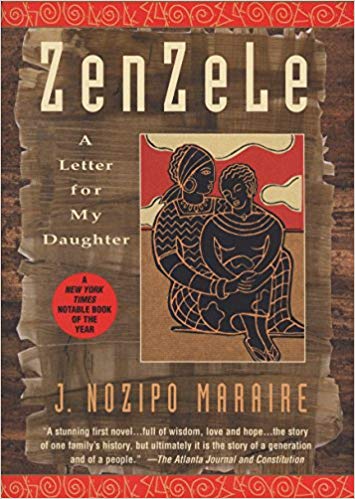
Nozipo J. Maraire (Zenzele: A Letter for My Daughter)
A mother in Zimbabwe writes a long letter to her daughter, who is on the way to America to study at Harvard, tracing the family's role in Zimbabwe's struggle for independence and what it means to be an African woman.


Sue Nyathi (The Polygamist and The Gold Diggers)
The Polygamist weaves a tale about four women whose lives become intertwined as a result of their love for one man. Set in modern-day Zimbabwe, the story is narrated through the four female protagonists. Joyce is the legitimate first wife of Jonasi Gomora; Matipa is an ambitious, educated high flyer with an eye for the good things in life. Essie is the girl next door from the poverty-stricken township where Jonasi grew up in. Lindani is a beautiful young girl who has nothing going for her but her greatest assets: her beauty and her body. Sue Nyathi takes readers on a journey beyond the bedroom door of a polygamous man and his four Mrs Rights.

In Nyathi’s second novel, The Gold Diggers, it’s 2008 and the height of Zimbabwe’s economic demise. A group of passengers are huddled in a Toyota Quantum about to embark on a treacherous expedition to the City of Gold. Amongst them is Gugulethu, who is hoping to be reconciled with her mother; Dumisani, an ambitious young man who believes he will strike it rich, Chamunorwa and Chenai, twins running from their troubled past; and Portia and Nkosi, a mother and son desperate to be reunited with a husband and father they see once a year.They have paid a high price for the dangerous passage to what they believe is a better life; an escape from the vicious vagaries of their present life in Bulawayo. In their minds, the streets of Johannesburg are paved with gold but they will have to dig deep to get close to any gold, dirtying themselves in the process.


Bryony Rheam (This September Sun)
Ellie is a shy girl growing up in post-Independence Zimbabwe, longing for escape from the confines of small-town life. When she eventually moves to Britain, her wish seems to have come true. But life there is not all she imagined. And when her grandmother Evelyn is brutally murdered, a set of diaries are uncovered spilling out family secrets and recounting a young Evelyn's passionate and dangerous affair with a powerful married man. In the light of new discoveries, Ellie begins to re-evaluate her relationship with her grandmother, and must face up to some truths about herself in the process. Set against the backdrop of a country in change, Ellie burdened by the memories and the misunderstandings of the past must also find a way to move forward in her own romantic endeavours.


Irene Sabatini (The Boy Next Door and Peace and Conflict)
In Bulawayo, Zimbabwe, there is a tragedy in the house next door to Lindiwe Bishop--her neighbor has been burned alive. The victim's stepson, Ian McKenzie, is the prime suspect but is soon released. Lindiwe can't hide her fascination with this young, boisterous and mysterious white man, and they soon forge an unlikely closeness even as the country starts to deteriorate. 

Years after circumstances split them apart, Ian returns to a much-changed Zimbabwe to see Lindiwe, now a sophisticated, impassioned young woman, and discovers a devastating secret that will alter both of their futures, and draw them closer together even as the world seems bent on keeping them apart. The Boy Next Door is a moving and powerful debut about two people finding themselves and each other in a time of national upheaval.

In Peace and Conflict, ten-year-old Robert knows many things. He knows all about his hometown, Geneva, with its statues and cannons and underground tunnels and the Longest Bench in the World. He knows about the Red Cross and all the places his dad has been on his missions. He knows that his mum is writing a book about vampires and how long his older brother spends practicing his 'swag' poses in front of the mirror. He knows all about animals, too, because his Auntie Delphia is a vet in Zimbabwe.
But still he has questions. Is his neighbour, Monsieur Renoir, really evil? Why did he leave a Victoria Cross medal on Robert's doorstep? And why has Auntie Delphia disappeared? In the 'Peace and Conflict' unit in school, Robert learned all about wars and heroes. But as the lives of his friends, foes and family unfold, he discovers what it really means to be a hero . . .


Novuyo Rosa Tshuma (Shadows and House of Stone)
In Novuyo Rosa Tshuma’s first collection, Shadows, consisting of a novella and five short stories Novuyo sketches, with astounding accuracy, the realities of daily life in Zimbabwean townships and the peculiar intricacies of being a foreigner in Johannesburg. Vivid, sparse and, at times, tragically beautiful, Shadows is the work of a major new African voice. In the novella, Mpho, a young artist, wanders the streets of Bulawayo, wondering at the savagery of his neighbours. Their drive for survival has turned them into animals. Jobless, powerless and angry, he watches his ugly, ageing mother leave each night to prowl the streets in search of Johns, of love and of youth. When his mother dies alone in a hospital of AIDS for which the clinic could not provide ARVs, Mpho flees to Joburg to search for his girlfriend Nomsa. He finds her doing what he so hated in his mother taking off her clothes in front of strangers for money. She wants jewels, diamonds, nice cars. Things he can t provide. He returns to Bulawayo and is charged with insulting and undermining the authority of the President of the republic of Zimbabwe and causing prejudice to the creed of the state as a whole for his unwittingly controversial paintings. Standing trial for treason, Mpho wants nothing than to join his mother in the shadows."

In House of Stone, Bukhosi has gone missing. His father, Abed, and his mother, Agnes, cling to the hope that he has run away, rather than been murdered by government thugs. Only the lodger seems to have any idea. Zamani has lived in the spare room for years now. Quiet, polite, well-read and well-heeled, he's almost part of the family - but almost isn't quite good enough for Zamani. Cajoling, coaxing and coercing Abed and Agnes into revealing their sometimes tender, often brutal life stories, Zamani aims to steep himself in borrowed family history, so that he can fully inherit and inhabit its uncertain future.


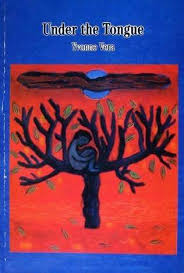
Yvonne Vera (Why Don't You Carve Other Animals?, Nehanda, Without A Name, Under The Tongue, Butterfly Burning and The Stone Virgins)
In Why Don't You Carve Other Animals?, the place is the white-ruled Rhodesia of the seventies (now Zimbabwe), the exile the African in his own land. Young men and women flee their villages to join the freedom fighters in the forests. These stories, set during the years of the armed struggle, tell of the other struggle, that of survival of those who stayed behind. 

In Nehanda, in the late nineteenth century white settlers and administrators arrive to occupy the African country of Zimbabwe (Rhodesia). Nehanda, a village girl, is recognized through omens and portents as a saviour. The resulting uprising by the Africans is brutally crushed but looks forward to the war of independence that succeeded a century later. Told in lucid, poetic prose, this is a gripping story about the first meeting of a people with their colonizer.

In Without a Name, in Zimbabwe, in 1977, in the midst of the guerrilla war raging against the white minority regime, a young woman escapes her war-ravaged village to go to the city, Harare. But the city has its own perils, and takes away considerably more than it offers. A moving, uncompromising novel, written in Vera?s graceful poetic style, about the horrors of war and oppression in the modern world and their effects on the individual soul.


In Under the Tongue, the adolescent Zhizha has lost the will to speak. In lyrical fragments, Vera relates the story of Zhizha's parents, and the horrifying events that led to her mother's imprisonment and her father's death. With this novel Vera became the first Zimbabwean writer ever to deal frankly with incest. With these surprising, at times shocking novels Vera shows herself to be a writer of great potential.

Butterfly Burning brings the brilliantly poetic voice of Zimbabwean writer Yvonne Vera to American readers for the first time. Set in Makokoba, a black township, in the late l940s, the novel is an intensely bittersweet love story. When Fumbatha, a construction worker, meets the much younger Phephelaphi, he"wants her like the land beneath his feet from which birth had severed him." He in turn fills her "with hope larger than memory." But Phephelaphi is not satisfied with their "one-room" love alone. The qualities that drew Fumbatha to her, her sense of independence and freedom, end up separating them. And the closely woven fabric of township life, where everyone knows everyone else, has a mesh too tight and too intricate to allow her to escape her circumstances on her own.
Vera exploits language to peel away the skin of public and private lives. In Butterfly Burning she captures the ebullience and the bitterness of township life, as well as the strength and courage of her unforgettable heroine.

The Stone Virgins is story set against the civil unrest of Zimbabwe in the early 1980s finds two sisters from the country town of Kezi struggling for survival in the face of terrible brutality and struggling with the rival temptations of town and city life.


*Side note: I always struggle on where to put Doris Lessing, who lived in Southern Rhodesia between 1925 and 1949, and had many novels set in, or about, Zimbabwe.  Her first novel, The Grass is Singing examined the racial divide in Rhodesia and follows the tragic love affair between Mary Turner - the wife of an unsuccessful farmer - and Moses - a black 'servant', and it was part of the African Writers Series. Then, there's The Golden Notebook, which weaves together four notebooks, including one notebook - the black notebook on Anna Wulf's life in Southern Rhodesia before and during World War II. Also, Martha Quest from the Children of Violence series grew up in Southern Rhodesia. There's also Doris Lessing's short story collection, African Stories which includes every story Lessing has written about the time she spent living on the African continent including stories from her first collection This was the Old Chief's Country, as well as stories from Five, The Habit of Loving and A Man and Two Women. As well as Mara and Dann - an epic SFF story set in the future in a re-imagined Africa and following an orphaned brother and sister travelling in search of water during a new ice age. The Sweetest Dream is set in London and a fictional African nation, Zimlia. This, of course, is not all of Lessing's cannon, which is extensive, including novels, short story collections, memoirs, poetry and more. 


15:41 No Comments
Older Posts

About me

Founded in 2011, bookshy represents two things: the young me who was so shy I escaped through books, and the older me whose shelf is always one book shy of being full.

bookshy is a space where I celebrate, promote and recognise contemporary African literature - although sometimes I go back in time to commemorate the greats. It is about the books I love, the books I have read and the books that I am dying to read.

Follow

recent posts

Blog Archive

  • ▼  2026 (1)
    • ▼  June (1)
      • On Daughters, Violent Fathers, and Mothers Who (In...
  • ►  2020 (7)
    • ►  October (2)
    • ►  May (3)
    • ►  April (2)
  • ►  2019 (14)
    • ►  December (3)
    • ►  July (1)
    • ►  June (3)
    • ►  February (2)
    • ►  January (5)
  • ►  2018 (31)
    • ►  December (3)
    • ►  October (5)
    • ►  August (1)
    • ►  July (4)
    • ►  June (4)
    • ►  May (2)
    • ►  March (6)
    • ►  February (2)
    • ►  January (4)
  • ►  2017 (42)
    • ►  October (1)
    • ►  September (1)
    • ►  August (6)
    • ►  July (6)
    • ►  June (6)
    • ►  April (7)
    • ►  March (3)
    • ►  February (5)
    • ►  January (7)
  • ►  2016 (72)
    • ►  December (7)
    • ►  November (2)
    • ►  October (13)
    • ►  September (9)
    • ►  August (8)
    • ►  July (3)
    • ►  June (7)
    • ►  May (4)
    • ►  April (10)
    • ►  March (6)
    • ►  February (2)
    • ►  January (1)
  • ►  2015 (54)
    • ►  December (8)
    • ►  November (4)
    • ►  October (12)
    • ►  August (5)
    • ►  July (4)
    • ►  June (5)
    • ►  May (2)
    • ►  April (3)
    • ►  March (1)
    • ►  February (5)
    • ►  January (5)
  • ►  2014 (71)
    • ►  December (14)
    • ►  November (5)
    • ►  October (8)
    • ►  September (9)
    • ►  August (8)
    • ►  July (6)
    • ►  June (4)
    • ►  April (4)
    • ►  March (2)
    • ►  February (5)
    • ►  January (6)
  • ►  2013 (76)
    • ►  December (2)
    • ►  November (3)
    • ►  October (5)
    • ►  September (6)
    • ►  August (6)
    • ►  June (13)
    • ►  May (8)
    • ►  April (11)
    • ►  March (10)
    • ►  February (6)
    • ►  January (6)
  • ►  2012 (169)
    • ►  December (12)
    • ►  November (12)
    • ►  October (13)
    • ►  September (5)
    • ►  August (13)
    • ►  July (13)
    • ►  June (17)
    • ►  May (17)
    • ►  April (17)
    • ►  March (17)
    • ►  February (14)
    • ►  January (19)
  • ►  2011 (20)
    • ►  December (20)

Popular Posts

  • Book Review: Sue Nyathi's 'The Polygamist'
  • Book Review: Chris Abani's 'Becoming Abigail'
  • 20 Short Story Collections by African Women Writers

Get in touch!

Created with by ThemeXpose